Characteristics of Early Renaissance Art in Florence and Northern Renaissance

As an architectural style, Renaissance architecture appeared in 15th century Florence, Italy, and from in that location on spread throughout Europe until the cease of the 16th century. The Renaissance style replaced the medieval Gothic style and took its inspiration from Roman ruins present in Italy as well as from books of aboriginal architects, such as Vitruvius. Information technology is a style that both revives and innovates the techniques of aboriginal Greeks and Romans. Below are presented the primary characteristics that volition allow y'all to recognize this unique fashion anywhere in Europe.
i. The Key List Of Elements To Look For In Renaissance Architecture

If you keep in mind the following list of elements, you will be able to tell Renaissance buildings apart from others easily. Offset, only iii types of buildings were built: churches, palazzos, and villas. The villa was meant to be a countryside residence and the palazzo as a town residence. These types are still valid in the rest of Europe, with palazzo as palace and villa often transformed equally a castle.
Moreover, Renaissance buildings feature apartment classicism, meaning that the edifice's walls practise not have many concrete depths in their decorations. To understand this, it is best to await at a Baroque exterior and see that it features a lot of depth in the decoration. Another point of the flatness is the fact that curved lines are never used in buildings. Everything is relatively straight, featuring merely a few arches.
The most mutual decorative elements are the columns, pilasters, pediments, arches, blind or not, and stringcourses. Moreover, the different stories of the façades are often marked with decorations, then one can easily tell if the edifice is ane story high or two stories loftier just by looking.
2. The Use Of Columns In Renaissance Architecture
Are you enjoying this article?
Sign upwards to our Free Weekly Newsletter
Please cheque your inbox to activate your subscription
Thank you!
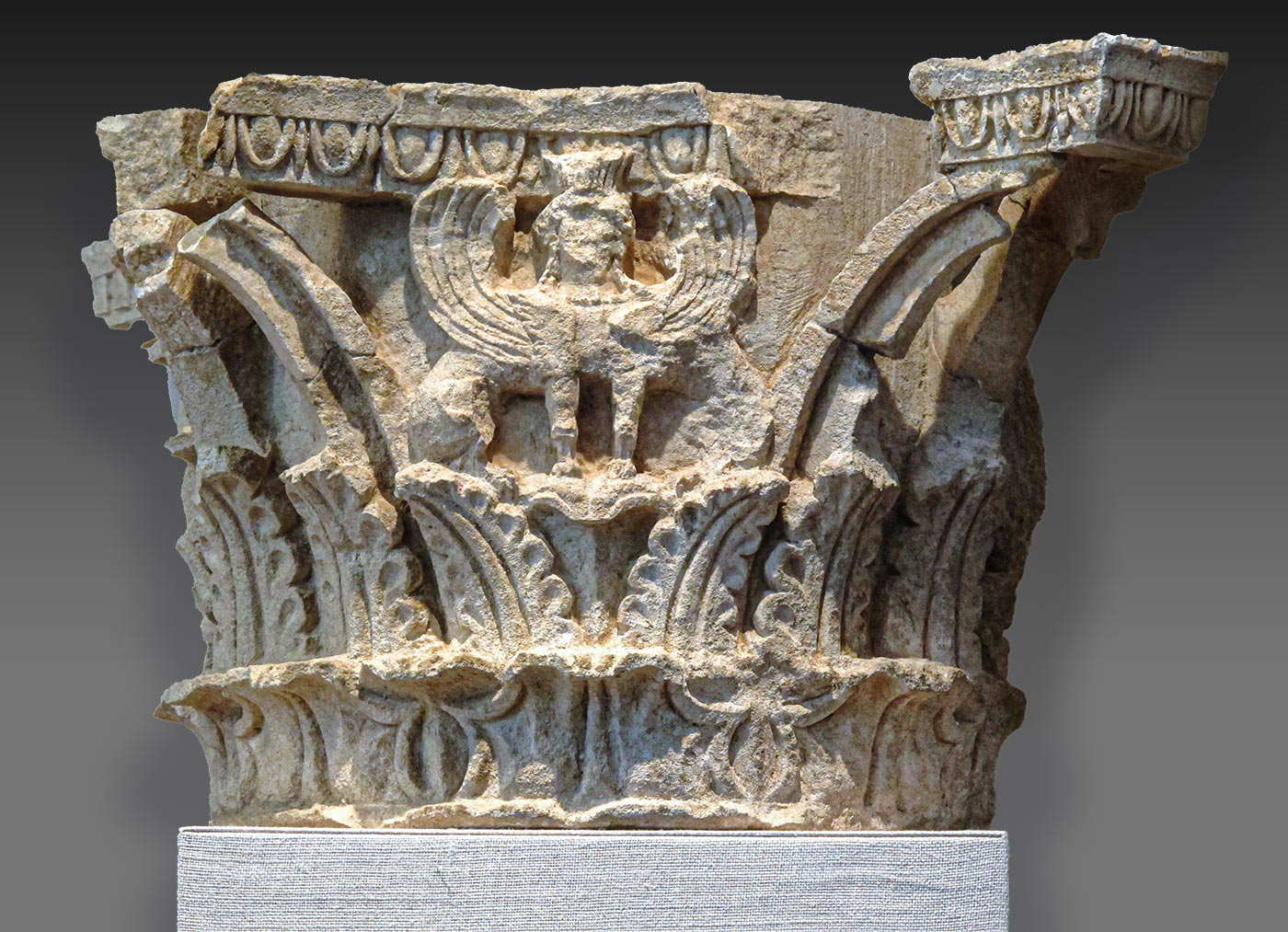
Although almost people tend to associate columns with aboriginal Greek or Roman temples, they are also an important characteristic of Renaissance architecture. Afterwards the Fall of the Western Roman Empire in 476, the knowledge and techniques developed by the Romans were gradually lost. In the 15th century, the people who lived in Italian republic did not know the techniques of ancient Romans. They were surrounded past ruins of Roman buildings that they had no idea how to rebuild. Yet, because the region of Italy became interested in sometime manuscripts, chance had information technology that they came across ancient documents purchased from Arabs. Some were treatises on architecture.
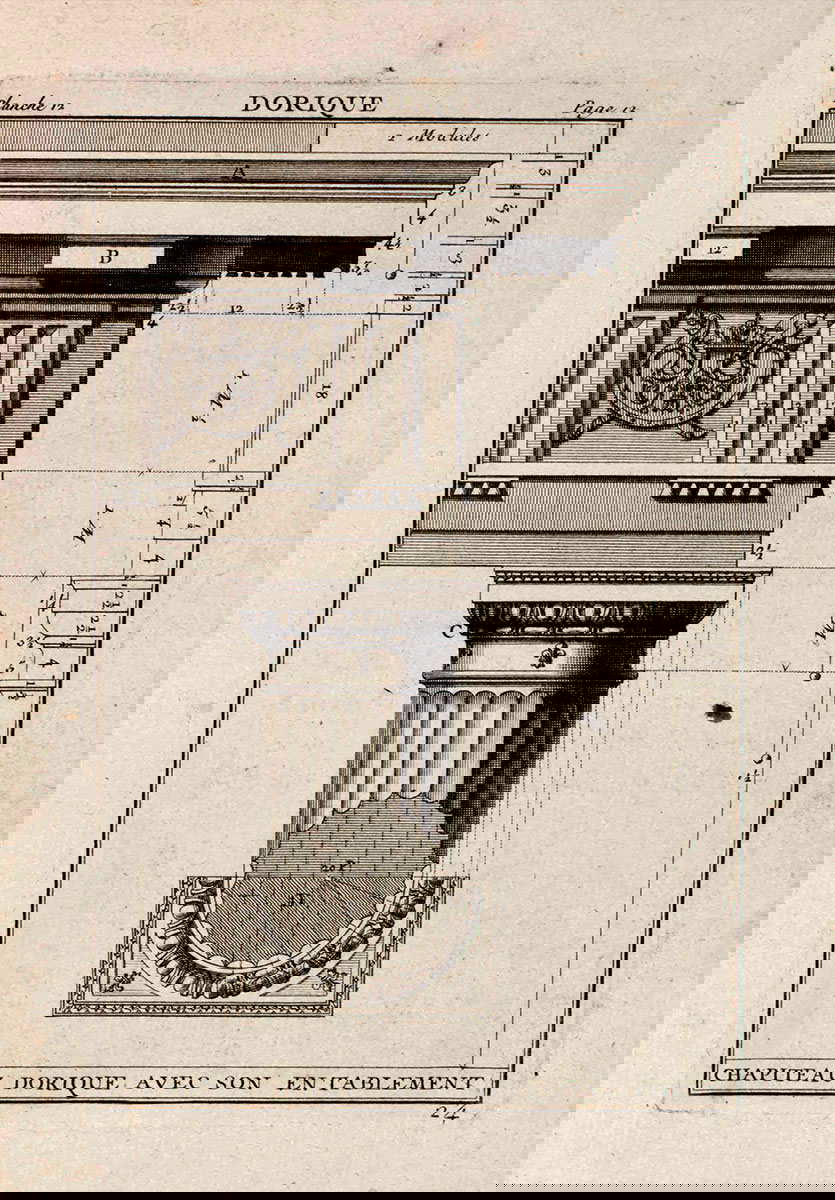
Columns seem to exist an piece of cake chemical element to build, but that is merely credible. Without whatsoever knowledge of the right height, width, and the right rigorous mathematical formula, 1 will not be very successful in building a column. Past finding books that explain these details, Renaissance architects could learn how to do information technology. They also learned about the three registers of columns: doric, ionic, and corinthian. By learning how to build columns, architects rendered them a fundamental feature of most Renaissance buildings.
3. The Extensive Use Of Geometrical Shapes

While Gothic architecture makes utilise of some geometrical shapes, information technology does non have an understanding of them equally Renaissance architecture does. Mastery of geometrical shapes in architecture is essential because information technology tin can ensure the stability of the building over fourth dimension and use space in the correct mode. Information technology likewise contributes to the height of a building: the more stable a construction is, the taller and grander the end consequence may exist.
Nearly edifice plans from the Renaissance make utilize of the circle and foursquare in their designs. This ensures that the building has a sturdy foundation, simply it besides plays an artful role, making the plan full of proportion. The employ of geometrical shapes in plans is also visible on the façades because most of them are an interplay of circles, squares, and triangles.
four. The Vibrant Interiors Painted Past Renaissance Masters

The vibrantly painted interiors of about Renaissance buildings are a must on this list, despite non exactly existence an architectural characteristic. Due to the betterment of both materials and techniques, frescoes are often highly associated with Renaissance art. The Sistine Chapel is, past far, the most famous example where architecture provides the proper setting for a scenic painted interior.
Artists grew in numbers during the flourishing of arts in the 15th and 16th centuries in Europe, and patrons commissioned them more than ever. This increased the involvement in interior decoration. The austere aboriginal look of a Renaissance building exterior gave way to an interior with painted frescoes depicting religious subjects, often with ancient-like painted vegetal decorations.
v. The Return Of Domes In Renaissance Architecture
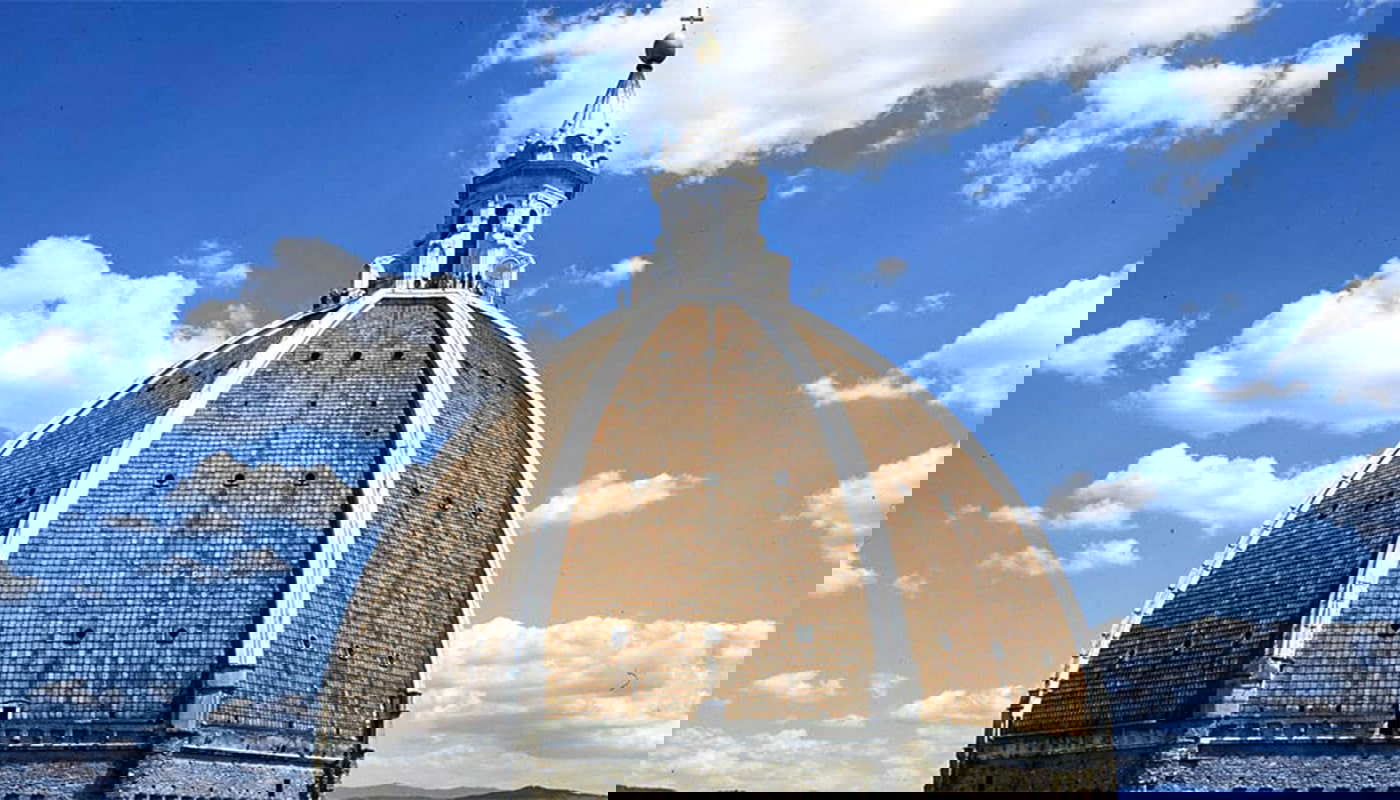
Domes are familiar architectural elements that are still widely used in contemporary buildings. Even so, they were non used in medieval architecture and made a comeback merely in the Renaissance. Due to ancient authors similar Vitruvius, architects were able to figure out the proper method for building a dome.
Why was it so tricky beforehand? A dome does non have a foundation of its own. Instead, it uses the edifice walls on summit of which it is placed equally a foundation. Due to this, a wrong mathematical formula may crusade the building to collapse nether the dome'southward weight.
The most well-known Renaissance domes are those made by Brunelleschi in Florence and by Michelangelo in Rome. However, their construction would not take been possible without the theory provided by Vitruvius. In this sense, the recovery of ancient manuscripts again played a significant role in the evolution of Renaissance compages.
6. The Importance Of Linear Perspective In Architecture
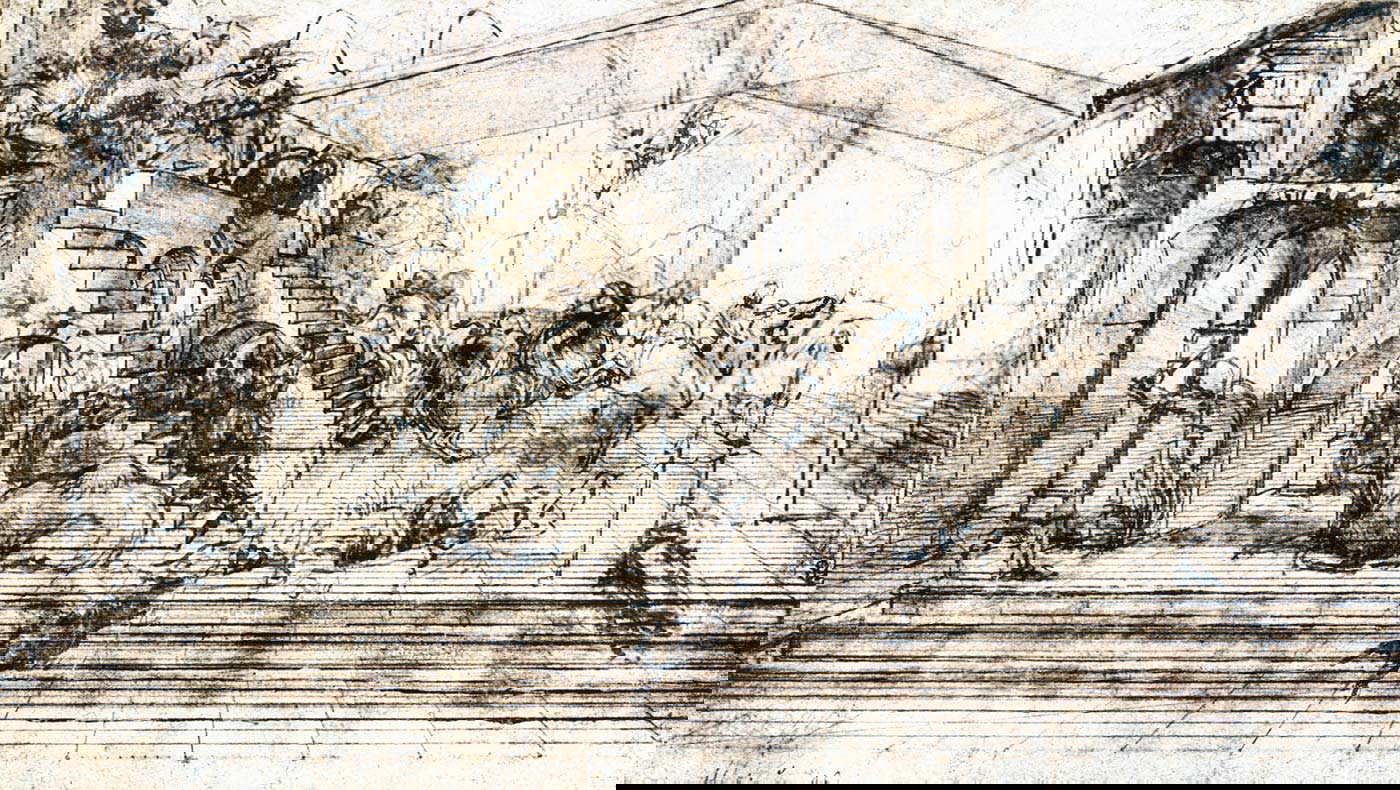
Another important discovery of the Renaissance was linear perspective. This discovery was made by artists who employed it mainly in painting and drawing. However, it came to play a crucial role in compages too. This occurred due to the Renaissance human platonic that encouraged people to take a universal approach to artistic and intellectual activities, thus avoiding a specialization of talents. Because of this, about architects were also artists.
Every bit architects were also draftsmen or painters, they started using linear perspective in architecture too. The beginning to do and so was Filippo Brunelleschi. The part of linear perspective in Renaissance compages is the same equally in painting: it must guide the eye to a designated identify and offer a sense of depth. The sense of space and depth was vital equally it gave what we would call today a 3D sensation. Linear perspective was benign for façades equally information technology provided the necessary visual guide for the middle. The viewer would follow the long and directly lines of a column and arrive at its busy uppercase.
7. Renaissance And Ancient Elements Mixed
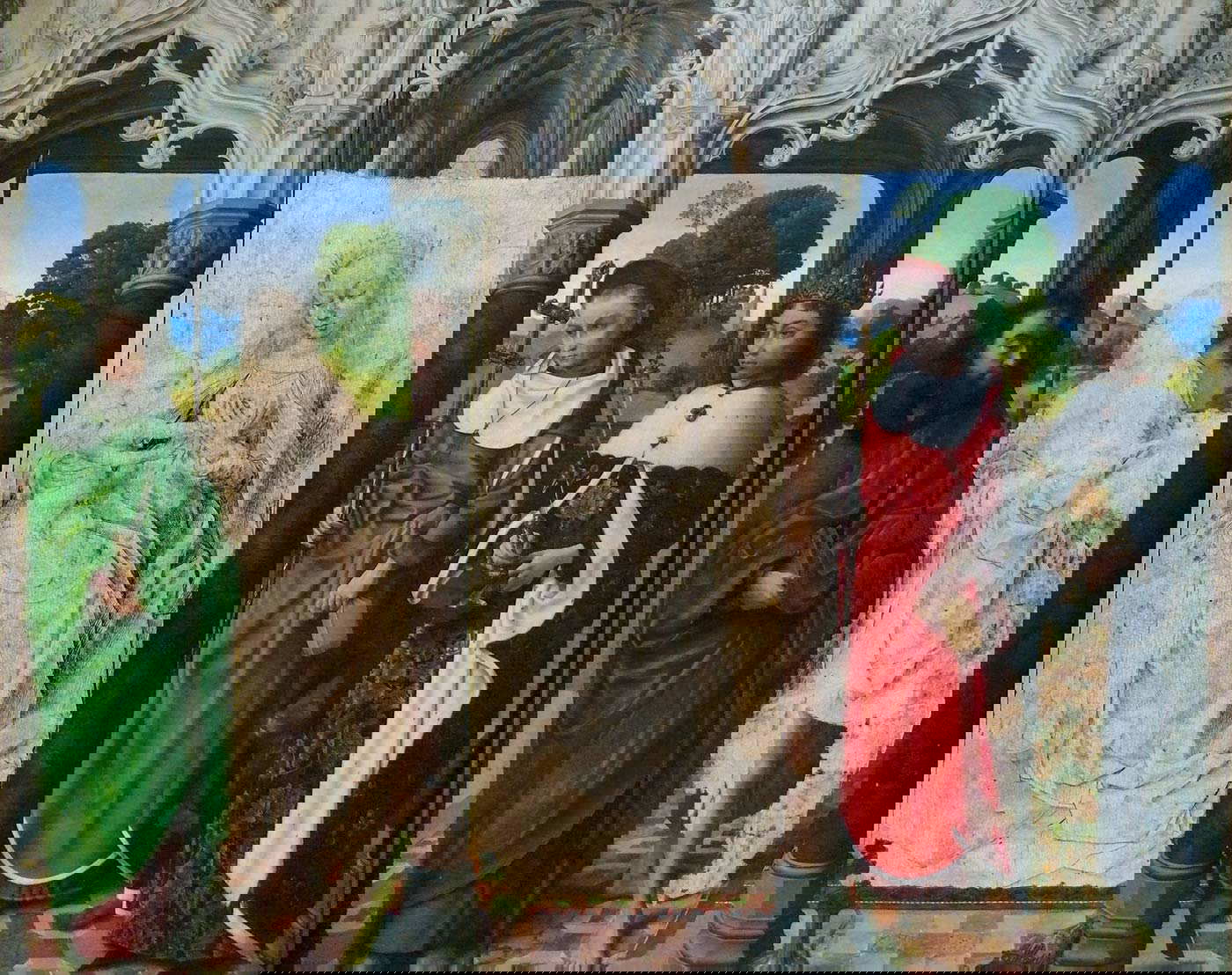
If yous ever look at a building and tin identify some ancient elements but fail to figure out the origins of all architectural characteristics, you are well-nigh likely looking at a Renaissance building. Renaissance architecture borrows many elements from ancient Greek and Roman buildings but it is not an exact replica. Both architects and artists were deeply encouraged to create elements or motifs that would get well with ancient ones. Even Michelangelo would ofttimes introduce ancient motifs and advised his colleagues to do the same.
Even so, this freedom did not mean that annihilation was possible. The artist had to exist inspired by ancient Greek and Roman civilization and create new elements that would all the same seem to be from the same register. To put it in more gimmicky terms, the artist had to enter the mood of the Ancients and create accordingly.
eight. Always Symmetrical
Because Renaissance compages has proportion, harmony, and linearity, symmetry seems to exist a natural requirement that completes this picture. For example, the Renaissance artist Leonardo Da Vinci considered that the relationships found betwixt elements were similar to the mathematical relationships found and derived from nature. If nature, God'due south creation, is mathematical, proportionate, and symmetrical, and so homo-fabricated creations ought to be so too. Artists like Da Vinci took to heart this observation and strived to create balanced works in their painting, sculpture, and architecture.
While Renaissance compages is sure to offer a variety of buildings, symmetry is a common element all over. It is truthful for buildings from kingdom of the netherlands or Deutschland even if they appear to be very different from their Italian counterparts. This is proved through looking at the buildings and the best-selling architectural books from the 16th century. One such book is the architecture treaty of Vignola, which sold in more than 250 international editions during the Renaissance period. Accompanied past practical instructions and a lot of illustrations, it was the to-go volume for whatever builder. Moreover, this demonstrates the shut relationship betwixt theory and do in the Renaissance.
ix. The Philosophy Backside Renaissance Architecture

While the previous points dealt with more applied characteristics, it is also worth mentioning the principal philosophy backside Renaissance buildings. During the Center Ages, the great and imposing buildings of the Gothic fashion sought to brand use of light: huge stained-glass windows would create a holy atmosphere for the company. Thus, in what way did the philosophy change for Renaissance architecture?
For Renaissance architecture, the ideal went a bit beyond traditional and medieval Christianity – information technology admitted that at that place were valuable ideas in ancient idea besides. Thus, the Renaissance is a mix of pagan civilization and compages repurposed for Christian traditions. The great minds of Artifact are no longer banished, just they are accepted and used in the name of God. The image that a building should accept is that of a pagan temple now offered to God. This is visible in how exteriors and interiors are constructed. We see stern, pagan-looking exteriors with small hints of Christianity, and painted and busy interiors that tell Biblical stories, such as episodes from Jesus' life.
10. Buildings of Renaissance Architecture You Ought To Know

The Renaissance style is extensively showcased in numerous buildings. Here are a few of the most notable examples:
St. Peter's Basilica in Rome, Italy. It is a 1000 church that highlights a meaning number of the characteristics discussed to a higher place.
- Sant' Andrea in Mantua, Italian republic
- Villa Capra in Vicenza, Italia
- Château de Chambord and parts of the Louvre are nifty examples from French republic.
Additionally, the must-know Italian Renaissance masters are as follows:
- Filippo Brunelleschi
- Lorenzo Ghiberti
- Leon Battista Alberti
- Donato Bramante
- Giulio Romano
- Andrea Palladio
Through their incredible works, yous can get a glimpse of the classical and canon Renaissance buildings that inspired the entirety of Europe.
Source: https://www.thecollector.com/10-characteristics-of-renaissance-architecture/
0 Response to "Characteristics of Early Renaissance Art in Florence and Northern Renaissance"
Post a Comment